
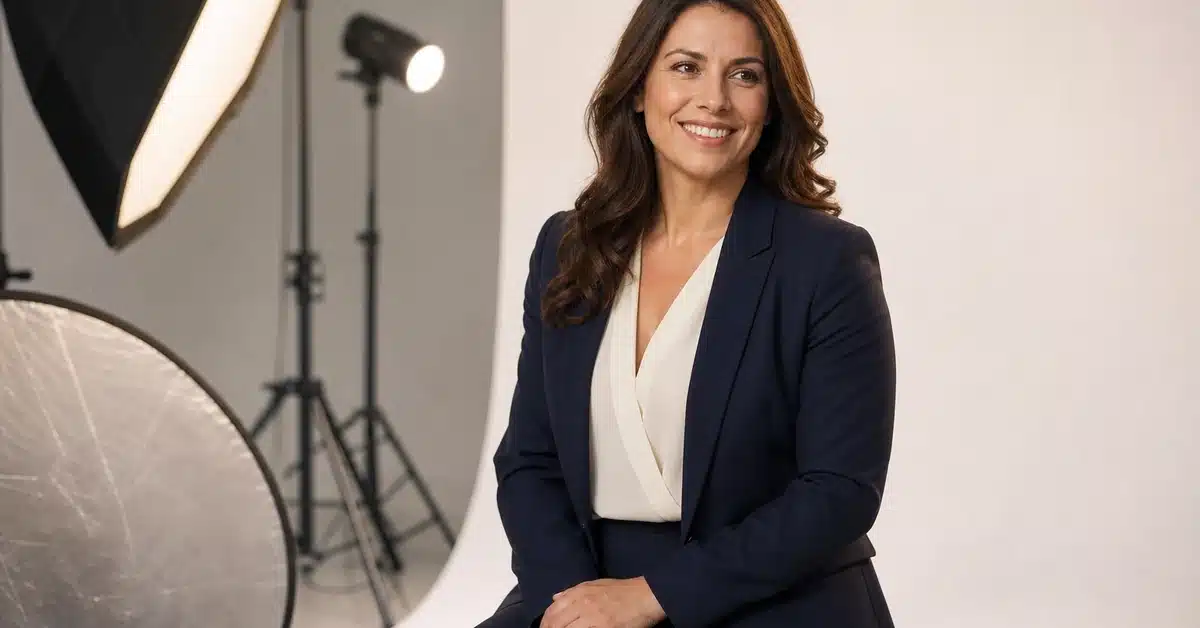
Professional women headshots do more work in three seconds than your resume does in three pages. Before anyone reads your bio, scans your experience, or clicks your portfolio — they’ve already formed an impression. That single frame on LinkedIn, your company’s team page, or a conference speaker lineup carries weight you can’t afford to leave to chance.
And for women, that weight lands differently. The same photo that reads as “confident” on a man can read as “cold” on a woman. The smile that makes a male executive seem “relatable” can make a female executive seem “less serious.” Navigating this double bind isn’t about playing someone else’s game. It’s about understanding the rules so you can break them on purpose. Professional women headshots, when done right, don’t minimize who you are — they present the best, most authentic version of it to the people who need to see it. Getting professional women headshots right means walking into the studio knowing what works, what doesn’t, and why the difference matters.
The Real Cost of an Outdated Headshot
LinkedIn profiles with professional photos get 21 times more profile views and 36 times more messages than those without, according to LinkedIn’s own data. That’s not a rounding error — that’s the difference between being found and being invisible. If you’re a consultant, a job seeker, or anyone whose next opportunity depends on being seen by the right person, those numbers aren’t vanity metrics. They’re revenue.
But the stats get sharper from there. Professional headshots increase perceived competence by 76% and perceived influence by 62% compared to amateur images, according to PhotoFeeler’s analysis of over 60,000 ratings. And 73% of hiring managers make initial judgments within the first 30 seconds of viewing a professional headshot, as Clive Arrowsmith Photography notes in its 2025 guide.
Here’s what’s wild: 87% of board members and investors research executive photos before key decisions. Executives with professional photos generate 71% more engagement on LinkedIn. Companies with professional executive team photos see 34% higher trust ratings. EasyHeadshots.ai compiled these numbers. They should make you reconsider every team photo you’ve ever seen on an “About Us” page.
Your headshot isn’t decoration. It’s infrastructure. For professional women headshots specifically, the investment returns compound — because the biases are sharper, the scrutiny is higher, and the gap between an amateur photo and a professional one is wider for women than it is for men. The data bears this out clearly.

What Makes Headshots Different for Women
The authority-approachability tension isn’t imagined. A 2024 study published in Nature found that gender bias is more prevalent in images than in text — and that viewing gendered images shifts people’s beliefs for at least three days afterward, as documented by Capturely in their comprehensive women’s headshot guide.
Only 11% of people shown in Google Image results for “CEO” were women — even though 27% of U.S. CEOs were women at the time, according to University of Washington research. The images people see shape what they believe is possible. That’s not just a political point. It’s a professional reality that affects how every woman’s headshot is received.
Then there’s the preparation gap. 77% of women describe themselves as camera-shy, according to Dove and Unilever research cited by Capturely. Most women walk into a headshot session already uncomfortable. That matters because tension shows — in your shoulders, in your jaw, in the space between your eyebrows. A photographer who understands this difference approaches the session differently from the first frame.
And the CROWN Workplace Research Study from Dove and LinkedIn found that Black women’s hair is 2.5 times more likely to be perceived as unprofessional. 66% of Black women have changed their hair for a job interview to reduce discrimination risk. These aren’t abstract data points — they’re the actual calculus behind millions of professional women headshots taken every year. Getting yours right means accounting for realities that generic headshot guides never mention.
People form trustworthiness judgments in just 100 milliseconds of viewing a face, according to research by Willis and Todorov in Psychological Science. That’s one-tenth of a second. Professional women headshots that ignore the specific dynamics women face — wardrobe, expression, makeup under studio lighting, the authority double bind — leave that split-second judgment to chance.
Wardrobe Decisions That Photograph Well
Your outfit should fit. Try everything on before session day — a jacket that pulls at the shoulder or a blouse that billows unpredictably won’t fix itself on camera. An oversized jacket or baggy top won’t be flattering in a tight headshot frame, and you won’t know until you see the proofs.
Start with a neutral or solid base. White, cream, black, navy — these anchor the frame without competing with your face. Long and three-quarter sleeves photograph better than short sleeves or sleeveless, according to N. Lalor Photography‘s corporate headshot wardrobe guide. The reasoning is practical: bare arms in a tight headshot crop draw attention away from your face.
Skip busy patterns, especially small houndstooth or tight stripes — they create a moiré effect on digital sensors that looks like a vibrating optical illusion. Skip chunky jewelry that catches light unpredictably. A single necklace or a pair of earrings photographs better than a full arm party. The frame is small. Your face fills most of it. Everything else should support, not shout.
What Works by Industry
Finance and law: structured blazers, jewel tones, zero distractions. You want the viewer thinking about your judgment, not your accessories. A navy or charcoal blazer over a cream or white top reads as authoritative without aggression.
Tech and startups: smart casual with intention. A well-cut blazer over a quality knit reads as authoritative without the corporate stiffness. The goal is “I build things” not “I sit through things.” Warm neutrals and deep greens work well here — they feel human in an industry that can feel cold.
Healthcare: approachable polish. Soft blues, warm neutrals, clothing that doesn’t distract from the trust you’re building. Scrubs are fine for clinical roles if that’s how patients see you — authenticity beats formality in care settings.
Creative and marketing: texture and color tell the story here. A cobalt blazer or an intentional statement piece signals taste — and taste is currency in creative fields. You can push further than corporate norms allow because creativity is the product.
Real estate: polished and approachable, with enough personality that clients feel they know you before the first showing. Structured blazers work. So do well-fitted cardigans. The headshot should say “I know this market” and “you can trust me with the biggest transaction of your life” at the same time.
Consulting: crisp, modern, restrained. Think management consultant, not fashion consultant. A well-tailored blazer in a confident color — deep burgundy, charcoal, midnight blue — communicates that your advice is worth the invoice.
Bring multiple options to your session. The outfit that looks perfect in your mirror might photograph completely differently under studio lights. Professional headshots for women benefit from options that account for how colors shift under strobes versus natural light.
Posing and Expression: The Confidence-Authority Balance
The single biggest factor in how people perceive your headshot? Whether you’re smiling. A teeth-showing smile boosts Likability by +1.35, Competence by +0.33, and Influence by +0.22 — the largest positive move across every category in PhotoFeeler’s analysis of 60,000+ ratings.
But not every industry rewards a full smile. Corporate law, C-suite finance, and some consulting roles lean toward a more contained expression — what photographers call the “confident half-smile.” It reads as assured without performance. The key for professional women headshots is matching the expression to the context — a startup founder and a federal judge need different energies.
Shoulders back. Chin slightly forward and down — it sounds counterintuitive, but tilting your chin down while pushing slightly forward defines the jawline and eliminates the double-chin effect. Angle your body about 45 degrees from the camera, then turn your face back toward the lens. Straight-on shoulders photograph wider than you are.
A skilled headshot photographer walks you through all of this. You don’t need to memorize poses. You need to show up, trust the direction, and let your real expression come through between takes. The best shots are almost never the first one. They happen ten minutes in, when you’ve stopped performing and started just being in the room.
Hair, Makeup, and Looking Like Yourself on Camera
Studio lighting is honest. More honest than your bathroom mirror. It reveals texture, shine, and every layer of foundation. The goal for professional women headshots is you — the version of you that shows up to an important meeting, not a version three shades lighter or heavier than how you actually present.
Makeup should be matte where possible. Shimmer catches strobes and reads as shine on camera. Bring powder for touch-ups between setups. Define your eyes — mascara and a subtle liner read well on camera even when they feel heavy in person. Skip anything experimental. Today is not the day to try that viral contouring technique you saw at 11 PM.
For hair: do it the way you normally wear it professionally. If you wear it natural, wear it natural — the CROWN study data makes clear why this matters beyond aesthetics. If you straighten or blow it out, do that. Professional women headshots should capture how you actually show up.

Stay hydrated the day before and morning of — skin picks up hydration in ways makeup can’t fully replicate. Skip alcohol the night before. It shows in your eyes.
Studio vs. Environmental: Choosing Your Setting
There’s no universally right answer. There’s the right answer for your industry and your personal brand.
A studio headshot with a clean backdrop puts you in complete focus. Nothing competes. The lighting is controlled. The result is crisp, repeatable, and versatile — it works on LinkedIn, on conference badges, in press mentions, and on your company’s leadership page. This is the default for corporate professionals, attorneys, consultants, and most executives. Professional women headshots shot in a studio environment benefit from the control: consistent lighting eliminates variables that can undermine the authority you’re projecting.
An environmental headshot — shot outdoors or in a workspace — adds context. It telegraphs personality before you say a word. For a relaxed outdoor setting, many clients feel more comfortable and the images feel polished, capable, and approachable, as Anna Moffat Photography describes in a recent session walkthrough. Environmental shots work particularly well for entrepreneurs, creatives, and professionals whose brand is built on approachability rather than formality.
The 2025 trend is toward bold backgrounds and color psychology — deep blues and warm earth tones that convey trustworthiness and warmth, moving away from the stark whites and greys that dominated corporate headshots for a decade, according to Matt Roberts Photography‘s analysis of current styles. Authentic expressions, rather than static, overly posed looks, define the modern standard.
You need more than one shot. One for LinkedIn. One for your company bio page. Possibly a third for speaking engagements or media requests. A good session delivers a gallery, not a single frame. Professional women headshots work hardest when you have options for different contexts — the serious one for board presentations, the warm one for client bios, the approachable one for social.
How to Prepare for Your Session: A Timeline
Success in headshot photography is 50% client preparation and 50% photography. The number one reason clients need to come back for reshoots is that they brought the wrong clothing to the first session, according to HeadShots Inc.‘s preparation guide. Professional women headshots succeed or fail on the prep work done before you ever step in front of the camera.
One week out: finalize your wardrobe. Try everything on. Take phone photos in natural light — you’ll spot fit issues fast. Book hair if you normally get it cut or colored. Schedule the appointment a few days before, not the day of. Fresh cuts photograph stiffly for the first 24 hours.
Three days out: hydrate aggressively. Cut alcohol. Get sleep. Your skin will thank you in the form of fewer touch-ups and more keepers from the session.
Night before: steam or iron your outfits. Lay them out with accessories matched. Charge your phone — you’ll want to check reference shots during the session. Pack a small bag with powder, lip color, a comb, and safety pins. Safety pins solve problems you can’t predict.
Day of: eat a normal breakfast. Arrive early. Bring your outfits on hangers, not folded in a bag. Let the photographer handle the lighting, the posing, and the direction — your only job is to be present and trust the process.
What a Professional Session Actually Feels Like
If you’ve never done this, the unknown is half the anxiety. Here’s what to expect.
You arrive. The space is bright, clean, and set up before you walk in. A good photographer — like the team at Lightz Out Studios — has already tested the lighting, framed the backdrop, and dialed in the exposure before you get there. You are not the variable. The equipment is.
The first five minutes feel stiff. Everyone’s first five minutes feel stiff. A skilled photographer talks you through it — directing your angle, your chin, your shoulders, your gaze. Some sessions start in the hair and makeup chair, with a focus on creating natural yet polished looks, as Carmen Wong Fisch describes in her executive portrait process.
About ten minutes in, something shifts. You stop thinking about how you look and start having a conversation. The best shots happen here — between poses, between formal frames, when you’re reacting to something the photographer said and your face is actually doing what faces do. This is the universal experience across every session of professional women headshots: the wall comes down, the real person appears, and suddenly the frames stop looking like “professional photos” and start looking like you — just the best-lit, best-angled version of you that exists.
A professional session produces a selection of images you can use across platforms — LinkedIn, email signatures, company pages, speaker bios, press kits. It’s not one photo. It’s a visual strategy, the way Elaine Otto Photography describes her approach to executive branding shoots: structured wardrobe, authentic expression, images that work as a collection rather than isolated frames. Each image serves a specific purpose in your professional presence.
Frequently Asked Questions
How often should I update my professional headshots?
Every two to three years, or whenever your appearance changes meaningfully — new hair color, different glasses, significant weight change. If someone meets you in person and doesn’t recognize you from your headshot, it’s past time. Professional women headshots need refreshing when they stop looking like the person who walks into the meeting.
How many outfit changes should I bring?
Three to four. One safe option — your go-to professional look. One slightly more formal. And one that reflects your industry’s creative ceiling. The photographer can help you decide which photographs best once you’re under the lights. More options mean more versatility in the final gallery.
Should I bring my own makeup artist?
If you have a makeup artist you trust and can budget for it, yes. If not, many studios have recommendations or in-house options. Either way, communicate that you want the camera-ready version of how you normally look — not a transformation. The goal is polish, not disguise.
What’s the difference between a headshot and a branding portrait?
A headshot is a single, tight frame — shoulders up, clean background, focused on your face. A branding portrait session produces a gallery of images: wider environmental shots, working shots, detail shots. Headshots open doors. Branding sessions tell a story.
Do I need professional hair and makeup for a headshot session?
Not required, but strongly recommended. Studio lighting is less forgiving than natural light. A professional makeup artist knows how to apply for camera — matte finishes, defined eyes, none of the shimmer that reads as oil under strobes. Hair should look like you on your best day, not like you tried something new.
How long does a headshot session take?
Plan for an hour, though the shooting itself may be 30 to 45 minutes. The extra time covers setup, outfit changes, makeup touch-ups, and reviewing images. Rushed sessions produce rushed expressions. Give yourself breathing room, and you’ll leave with images you’re actually excited to use.
Your headshot is the first thing most people see. Make it count. Book a professional headshot session at Lightz Out Studios — San Diego’s fully equipped production studio with cyclorama wall, professional lighting, and a clean, modern environment built for images that do the work before you say a word.

