
For professional headshots actors, the image you submit is everything. Before your reel. Before your resume. Before you walk into the room. A casting director makes a decision about you in roughly the time it takes to scroll past a photo on your phone — and your headshot determines whether your name enters the conversation or gets scrolled past forever. The data backs this up: a 2024 Ringover survey of over a thousand recruiters found that 74% were more likely to interview applicants who submitted headshots. For casting directors, the number is higher.
Most actors treat their headshot like a chore — something to get done every couple of years when their agent nudges them. That’s the wrong frame. Professional headshots actors invest in are not an expense line. They are a strategic asset. The single most controllable variable in whether you get called in.
This guide covers everything about professional headshots actors rely on to get called in: what casting directors actually scan for when they open your thumbnail, how to find the right photographer, what to wear, how many looks you need, what AI headshots mean for the industry, and where to book a professional studio in San Diego that gives you the best possible result.
Why Your Headshot Is the Most Important Tool in Your Acting Career
Casting directors are not sitting in a dark room studying your face under a projector. They are scrolling. On a laptop in a production office with 47 other windows open. On an iPad at 11 PM catching up on submissions. On their phone while walking between meetings.
The professional headshots photography service market was valued at $3.01 billion in 2025 and is projected to reach $6.38 billion by 2033 — a 9.8% compound annual growth rate, according to Verified Market Research. This isn’t growing because people suddenly love getting their picture taken. It’s growing because the economics of first impressions have shifted entirely online.
Backstage puts it plainly: “Headshots are the key to breaking in as a professional actor. An actor’s headshot is their professional calling card — and the best ones do more than just catch a casting director’s attention in the moment. A great headshot is also memorable enough to pop back into the CD’s mind.”
That last sentence matters more than most actors realize. Casting happens in waves. CDs review submissions, set up a first round of callbacks, then circle back days later to fill gaps. If your headshot doesn’t stick, you vanish from the pool. The highest-quality professional headshots actors can submit are the ones that linger — not because they’re the prettiest photo, but because they communicate type instantly.
The U.S. actors workforce in 2024 numbered 34,785 people with an average annual wage of $61,063, per Data USA. That is 34,785 people competing for a finite number of roles — and every single one of them has a headshot. The question is whether yours does work theirs doesn’t.

What Casting Directors Actually Look For in a Professional Headshot
They look for one thing first: does this person look like the character we’re casting?
Not “is this a beautiful photo.” Not “wow, great lighting.” Those things help, but only if the first box is already checked. A technically flawless headshot that doesn’t read as the right type is useless. A slightly imperfect headshot that screams the character? That gets the callback.
Spotlight, the UK’s largest casting platform, surveyed working casting directors and the feedback was consistent. “Make sure your headshot actually looks like you,” one CD told them. “Don’t use filters, holiday snaps or model shots.”
Spotlight’s casting director panel distilled it to a few non-negotiables. Your headshot has to be current. It has to be in color — black-and-white headshots are functionally obsolete. You need four to six distinct looks. And you should always get a second opinion before uploading anything.
The Headshot Company’s 2025 guide adds another layer: “Casting directors look for headshots that accurately represent the actor’s current appearance and personality. They want to see someone who is confident, relatable, engaging, and capable of conveying emotion. Authenticity is key. The focus should always be on your eyes, conveying sincerity and connection.”
The Five-Second Rule
You have about five seconds on a thumbnail grid. In that window, the CD is asking:
Does this person look like the breakdown? Is there something alive in their eyes? Do they look like a professional or someone who had a friend take this in their apartment?
If the answers are yes, yes, and yes, they open the full-size image. If any answer is no, they scroll. Permanent. No appeal.
MAMA Associates, a London talent agency, frames it sharply: “Headshots, showreels, CVs, and online profiles are the first point of contact between an actor and casting. They must present a coherent, confident, strategically positioned version of who you are. Out-of-date images cost you auditions quietly and continuously.”
Quietly and continuously. That’s what most actors miss. You won’t get a rejection email that says “we passed because your headshot is three years old and you don’t look like that anymore.” You just won’t hear anything. Silence is the only feedback loop.
How to Choose the Right Photographer for Professional Headshots
Not all photographers are headshot photographers. This is not gatekeeping — it’s a functional distinction. A wedding photographer capturing a candid laugh is solving a different problem than a headshot photographer capturing who you actually look like in a way that reads as a specific type.
The difference shows in technical choices. Headshot photographers use 85mm to 135mm focal lengths specifically because they flatten facial features in a flattering way without distorting proportions. They use three-point lighting with the key light at roughly 45 degrees above eye level — the industry standard that creates depth without harsh shadows. They deliver at 8-by-10 inches at 300 DPI because that’s what casting platforms and agencies require for print.
Backstage recommends finding photographers who specialize in actor headshots specifically — not general portraiture. Most professional headshot sessions cost between $400 and $1,500 total. That range exists for a reason. Below $400, you’re likely getting a photographer who doesn’t understand the casting market. Above $1,500, you’re paying for name recognition casting directors don’t care about.

Kayvon Esmaili, a working headshot photographer, says the most important thing an actor can do before booking is narrow their type. “Get as narrow as possible. Don’t be afraid to commit to a branding choice. Every brand in the world has to A-B test to see what works.”
That’s solid advice. Before you even contact a photographer, know what roles you’re targeting. The dad-next-door type doesn’t shoot like the edgy detective. The quirky best friend doesn’t shoot like the corporate lawyer. A great headshot photographer helps you execute on your type — but they can’t define it for you.
Questions to Ask Before Booking
Call the photographer. Do not just browse their website and hit “book.” Ask these questions directly:
Do you specialize in acting headshots or do you shoot everything? How many looks do you typically deliver in a session? What’s your turnaround time? Do you include retouching, and how heavy-handed is it? Will you help me pick the final selects, or do I choose alone?
The answers tell you whether they understand the casting ecosystem or just take nice pictures. Those are different skills. You need the first one.
Wardrobe, Makeup, and Grooming: What to Wear (and What to Avoid)
The rule for headshot wardrobe is counterintuitive but true: if anyone notices what you’re wearing, you’ve already lost. The clothes are there to disappear. To frame your face. To not compete with your eyes.
The Headshot Company advises actors to wear simple, non-distracting clothing in solid primary colors and jewel tones. No patterns. No logos. No text. No statement jewelry. No busy designs that pull focus from your face.
Why solid colors? Because they create a clean frame around your face without visual noise. Jewel tones — deep emerald, sapphire blue, burgundy — photograph especially well against most skin tones and backdrops. They add richness without distraction.
What to avoid: white shirts (blow out on camera, wash you out), neon anything (color casts onto skin), busy patterns (moire effect on digital sensors), anything with a collar so structured it looks like a costume, and anything you wouldn’t actually wear to an audition.
Grooming That Reads on Camera
Get a haircut about five to seven days before your shoot — not the day before. Fresh haircuts photograph as haircuts first and faces second. You want it to settle.
For makeup: less than you think. The camera sees everything, and heavy foundation reads as exactly what it is. A professional makeup artist who understands headshot photography is worth the investment. They know how to even out skin tone without making you look like you’re wearing product.
The Studio Pod puts it bluntly: “Aim for 7-8 hours of quality sleep the night before. Wear clothing in solid colors that complement your complexion. Let your eyes do the talking — they’re the windows to your soul.” That sleep advice is not fluff. Tired eyes are the single hardest thing to retouch convincingly.
Posing, Expression, and Eye Contact: Tips from Working Pros
The most common mistake actors make in headshots? They perform. They push an expression that feels like acting instead of simply being present with the camera. The result reads as try-hard. Forced. A casting director sees it in half a second.
Five working photographers shared their advice with Playbill, and the consensus was striking: “The most engaging images will be the ones where people are relaxed and unapologetically themselves. I’ve worked as a headshot photographer for over a decade in New York City, and if there’s one key I feel I’ve found in that time, it all boils down to curiosity.”
Curiosity. Not confidence. Not intensity. Not smolder. Curiosity creates an open expression. Something behind the eyes that makes a casting director want to know more.
Julia Nance, a headshot photographer, gives specific posing instruction: “Lean forward at the torso a little bit — this helps with perspective and makes the shot warmer. The chin forward and down technique helps accentuate the jawline. A little change in head position can help bring a headshot to life.”
Those adjustments are small. An inch of torso lean. A slight chin adjustment. Together they transform a flat, passport-style photo into something that reads as a person you want to meet.
Eye Contact That Connects
Your eyes have to be sharp. Not metaphorically — literally in focus. And they need to communicate something. Not a blank stare. Not a deer-in-headlights freeze. Something active. A thought. A question. A flicker of personality.
The photographer should be talking to you the entire session. The best headshot shoots feel like a conversation where a camera happens to be present. The moment you feel like you’re “being photographed” is the moment your expression closes off.
How Many Looks Do You Need? Theatrical vs. Commercial Headshots
The minimum is two. One serious theatrical shot — direct, grounded, showing dramatic range. One smiling commercial shot — warm, accessible, the version of you a brand would cast in their ad. Professional headshots actors submit for theatrical calls look different from what they send for commercial casting, and that’s the point. Each serves a different buyer.
Most working actors maintain four to six distinct looks across their portfolio. They rotate based on what they’re submitting for. The actor who shows up with one headshot for every audition is signaling they haven’t thought about type — and casting directors notice.
Spotlight recommends four to six headshots as the sweet spot. Backstage suggests “at least two looks for a headshot session — a serious theatrical shot and a smiling commercial shot.” The theatrical shot is for drama, prestige TV, film. The commercial shot is for brands, hosting, industrials. They read differently because they’re selling different things.
Additional looks beyond the core two depend on your type range. If you consistently play authority figures, add a leadership look. If you get called in for quirky best friend roles, add something with more energy and warmth. Never add a look just to have more photos. Each one should open a specific door.
The Rise of AI Headshots: Should Actors Use Them?
Over 12 million AI headshots have been generated for more than 80,000 customers on HeadshotPro alone. A Harris Poll survey reported by Tech.co found that 44% of U.S. job-seekers would consider using AI-generated headshots — with Millennials leading at 55%. Convenience was the top reason cited, followed by perceived quality and cost savings.
That’s the corporate job market. Acting is different.
AI headshots have a tell. The skin texture is slightly too uniform. The catchlights in the eyes are never quite right. The facial geometry — especially around the jawline and ears — can drift in ways that read as uncanny to a trained eye. Casting directors look at headshots all day, every day. They are the worst possible audience for an AI-generated image.
The agent’s perspective published on Poyey Photos is unambiguous: “Get a real photographer. Nothing is more lame for an actor than being surrounded by dozens of professional headshots while theirs is SO bad the DMV wouldn’t accept it. Consult with your agent. Your agent has seen the actors that are booking the jobs you are not.”
The AI headshot companies are targeting LinkedIn users and corporate professionals. They are not solving for casting directors. Until the technology crosses a threshold where even trained eyes can’t distinguish AI from photography — and we’re not there yet — stick with a real session.
There’s also the authenticity problem. A real headshot captures how you actually look in a specific moment. An AI headshot captures a probabilistic average of faces labeled as similar to yours. If you walk into an audition looking different from the AI-generated image — which you will, because AI images are composites, not photographs — you’ve broken trust before you’ve said a word.
How Often Should You Update Your Headshot?
Every 18 to 24 months. That is the industry consensus across agents, casting directors, and working photographers.
“Most headshots are good for about 18-28 months,” the Poyey Photos agent perspective notes. “If you have headshots older than 2 years, it is time to do it again.”
Update immediately if any of these happen: you change your hair significantly, you gain or lose noticeable weight, you grow or shave facial hair that changes your look, you age into a new casting bracket, or your agent tells you your shots aren’t landing auditions.
MAMA Associates is even more direct: “If you have changed hair, weight, or significantly aged, it’s time for new headshots.” No caveats. No “maybe wait until your current ones expire.” If you don’t look like your headshot, your headshot is working against you.
A useful rule: update your headshots at roughly the cadence you update your passport. If one is expired, the other probably is too.
Headshot Costs, Budgeting, and What to Expect
Professional headshot sessions range from $400 to $1,500 in most markets. New York and Los Angeles skew toward the high end. Regional markets trend lower. San Diego sits in the middle — competitive pricing with access to professional-grade studio space and equipment.
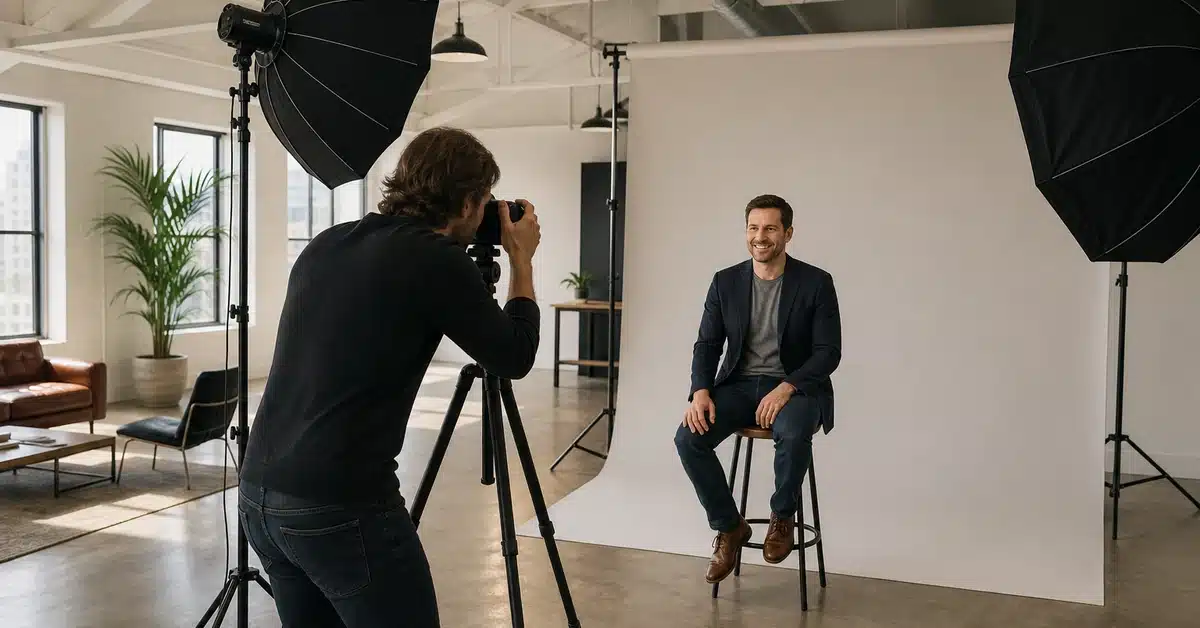
At Lightz Out Studios, you get a fully equipped 1,800 square foot professional studio with a cyclorama wall, professional lighting rigs, and multiple backdrop options — everything a headshot session needs — at $125 per hour with a four-hour minimum. That covers setup, multiple looks, and a comfortable pace instead of a rushed shoot.
What you should expect from a professional session: a pre-shoot conversation about your type and goals, guidance on wardrobe and grooming, two to four distinct looks captured, a selection process where you and the photographer choose the best frames together, and professional retouching that enhances natural features without altering your appearance.
Backstage confirms that “most professional headshot sessions cost between $400 and $1,500 total.” The key variable is the photographer’s experience level and market. But the price of a bad headshot — measured in auditions you never get — is higher than any session fee.
Budgeting Beyond the Session Fee
Factor in hair and makeup if you’re not doing it yourself. Budget $75 to $200 depending on the artist. Factor in wardrobe if you need a few solid-color tops you don’t already own. Budget $50 to $150. Factor in retouching if it’s not included. Budget $25 to $75 per final image.
Your headshot is not a one-time expense. At a two-year replacement cycle over a 20-year career, you’ll shoot roughly ten sessions. Spread across that timeline, a great photographer at $600 per session costs $3,000 total over two decades. That’s about $12.50 a month. Less than a streaming subscription. And it’s the thing getting you in the room.
Frequently Asked Questions About Professional Headshots Actors
What’s the difference between a theatrical and commercial headshot?
A theatrical headshot is serious, direct, and shows dramatic range — for drama, prestige TV, and film submissions. A commercial headshot is warm, smiling, and accessible — the version of you a brand would cast in an ad. Most actors need both. They serve different submission types and casting categories, and you rotate them based on what you’re auditioning for.
Can I use a selfie or phone photo as a headshot?
No. Phone cameras use wide-angle lenses that distort facial proportions — especially the nose and forehead. Professional headshots use 85mm to 135mm focal lengths specifically to produce flattering, accurate facial representations. Phone photos also lack the lighting control and resolution casting platforms require. It signals amateur status immediately.
How should I prepare the night before a headshot session?
Drink water throughout the evening. Skip alcohol entirely — it dehydrates skin and dulls eyes. Get seven to eight hours of uninterrupted sleep. Lay out your wardrobe the night before so you’re not rushing. Wash and dry your hair normally — don’t try a new product the morning of. Eat a regular meal. Showing up hungry photographs as showing up tired.
Do I need professional hair and makeup for headshots?
It depends on your comfort level and the roles you pursue. Men can often skip it if they manage skin tone well. Women pursuing commercial work benefit significantly — the camera reads uneven skin tone more aggressively than the human eye. If you hire someone, make sure they understand headshot photography specifically. Bridal makeup and headshot makeup are completely different disciplines.
How do I know if my photographer understands the acting industry?
Study their portfolio of actor clients. Do the headshots read as distinct casting types, or all variations on the same aesthetic? Does their website mention casting directors, agents, or specific casting platforms? Do they ask you about your type before the shoot? A photographer whose portfolio shows 30 headshots that all look like the same person in different clothes is a portrait photographer, not a headshot photographer.
Should I bring props or accessories to my headshot session?
Generally, no. The focus belongs entirely on your face and eyes — props distract from that. The one exception: glasses. If you wear glasses daily and they’re part of your look, bring them. Make sure they have anti-reflective coating — glare on lenses ruins headshots. And avoid transition lenses that darken under studio lights.
Your Headshot Is a Career Investment — Treat It Like One
The professional headshots photography market is growing at nearly 10% annually for a reason. In a world where first impressions happen on screens, the quality of your image determines whether anyone looks twice. That is just as true for actors as for executives — arguably truer, since your appearance is part of the product.
The actor’s checklist before booking: Know your type. Find a photographer who specializes in acting headshots — not general portraiture. Book a session in a professional studio with real lighting, real backdrops, and a space designed for this exact purpose. Prepare your wardrobe, sleep, and hydration in the days before. Show up relaxed and treat the session like a conversation, not a performance.
If you’re in San Diego, Lightz Out Studios provides exactly that — a professional 1,800 square foot studio at 5797 Chesapeake Ct equipped with a cyclorama wall, lighting rigs, and everything a headshot session needs. Book by the hour or full day. Bring your photographer or work with one of our preferred partners.
For production companies and agencies that need headshot sessions for their talent roster, Lightz Out Studios offers the same professional space with COI coverage and flexible booking — whether you’re shooting one actor or an entire cast.
The casting directors are scrolling right now. Make sure your headshot makes them stop.

