
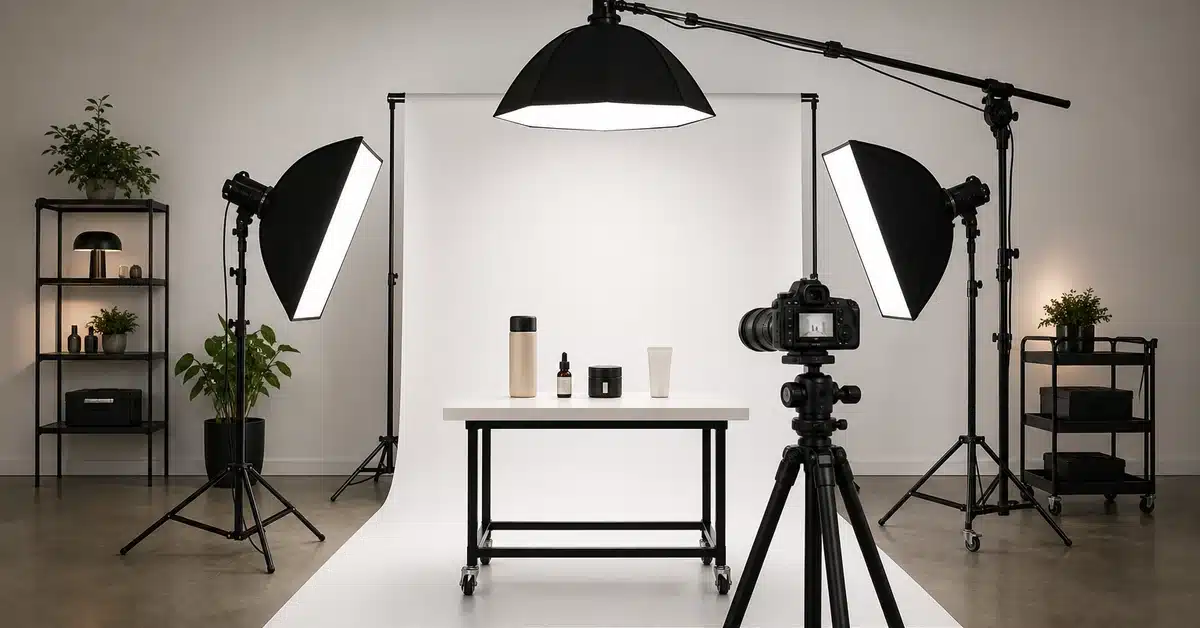
Product Photography Studio: The Ultimate Guide for Brands and Creators
A product photography studio is a professionally equipped space built specifically for capturing commercial-grade images of physical products — with controlled lighting, seamless backdrops, and specialized gear that ordinary locations simply cannot replicate. The right studio environment transforms everyday objects into compelling, sales-driving visuals that work across e-commerce listings, brand campaigns, and social media. Whether you’re a freelance photographer booking studio time or a brand producing a full content library, choosing the right product photography studio is the decision that shapes everything downstream.
Ready to book a professional shoot? Contact Lightz Out Studios and reserve your session today.
Table of Contents
- What Is a Product Photography Studio?
- Key Features of a Professional Setup
- What Products Are Typically Shot in a Studio?
- How to Choose the Right Product Photography Studio
- How to Prepare for Your Studio Session
- Common Mistakes to Avoid
- Book a Product Photography Studio in San Diego
What Is a Product Photography Studio?
Let’s be direct about what we’re talking about. A product photography studio is not just a room with decent lighting. It’s a purpose-built space designed to give photographers and brands complete control over every variable — light direction, background color, shadow density, ambient conditions, and shooting angle — so the only thing that matters inside the frame is your product.
That level of control is what separates studio images from lifestyle or location photography. When you shoot a product outdoors or inside a retail space, you’re negotiating with the environment. You’re chasing light windows, managing reflections from glass walls, and hoping the temperature doesn’t fog your cold-surface shots. Inside a professional product photography studio, you set the terms. The environment works for you, not against you.
This distinction matters more than ever. According to Verified Market Reports, the global product photography services market was valued at $4.8 billion in 2025 and is projected to nearly double to $9.7 billion by 2034 — a compound annual growth rate of 8.2%. That growth isn’t happening by accident. Brands at every level have recognized that product imagery is a revenue driver, not a line item to minimize.
The digital storefronts that dominate retail today — Amazon, Shopify, DTC brand sites — live or die on visual credibility. A blurry, poorly lit image doesn’t just fail to convert. It actively signals to shoppers that the brand isn’t serious. A professional product photography studio removes that risk entirely.

Key Features of a Professional Product Photography Studio
Not all studios are built the same. A production space that works brilliantly for portrait sessions may fall short for serious product work. Here’s what separates a great studio environment from one that’ll have you fighting conditions all day.
Controlled Lighting Systems
Lighting is the single most important variable in product photography — and also the hardest to get right without the right equipment. Studio-grade strobes, continuous LED panels, softboxes, reflectors, and flags give photographers the ability to sculpt light with surgical precision. The difference between an amateur product image and a professional one often comes down to two or three subtle lighting decisions: a rim light placed to separate the product from the background, a bounce card positioned to lift shadow detail on a label, a gridded strobe to prevent spill on a cyclorama wall.
A well-equipped studio stocks multiple light modifiers — strip boxes for edge lighting on tall products, octabanks for wrapping soft light around curved surfaces, beauty dishes for sharp specular highlights on cosmetics and electronics. You bring the creative vision. The studio provides the tools to execute it.
Seamless Backdrops and Cyclorama Walls
Paper backdrops handle straightforward flat-lay and catalog work well. But for high-volume product shoots, environmental simulations, or any project where the product needs to feel like it inhabits a real space — a cyclorama wall is the professional standard.
A cyclorama (or “cyc wall”) is a curved, seamless backdrop that sweeps from the floor up the wall with no visible corner or seam. That continuous curve creates an infinite horizon effect that reads as clean, modern, and completely camera-ready. For brands shooting multiple SKUs across a full production day, cyclorama walls eliminate hours of background seam removal in post-production. One consistent background. Every product, every angle. Done.
Double cyclorama setups — two connected cyc walls facing each other or arranged perpendicular — add an even more flexible shooting environment, enabling different background configurations without resetting the entire space.
Production Infrastructure
The best studios go well beyond lighting and backdrop systems. Production kitchens allow food and beverage brands to style and shoot recipes, drinks, and plated dishes on location. High ceiling clearances enable overhead rigs, drone angles, and large-scale installations. Adequate electrical capacity supports multiple strobe systems running simultaneously without triggering circuit breakers mid-shoot. Climate control prevents reflective surfaces from fogging, wood products from warping, and your team from overheating under studio lights after four hours of continuous shooting.
These aren’t luxury features. They’re the infrastructure details that determine whether a production day runs smoothly from first frame to final export — or becomes an expensive exercise in workarounds. Before you book any studio, verify these specifics. They’re the difference between an efficient shoot and an expensive one.
What Products Are Typically Shot in a Studio?
The honest answer is almost anything. Studios serve a wider range of product categories than most brands assume when they first start booking professional space.
Consumer Packaged Goods and Beauty
Skincare, cosmetics, supplements, bottled beverages, candles, packaged foods — CPG brands live and die by how their product packaging looks under studio light. Retail buyers, DTC customers, and wholesale distributors all make decisions based on the visual credibility of product imagery. Inconsistent lighting, visible label defects, or flat, uninspiring images communicate the wrong things about a product. The margin for error is essentially zero.
Apparel and Fashion Accessories
Flat-lay and ghost mannequin shots require a studio setup. E-commerce fashion brands typically shoot full seasonal collections in a single studio day — dozens or hundreds of SKUs against consistent backgrounds, lit identically so the product pages feel cohesive when a customer browses the catalog.
Electronics and Technology Products
Glossy surfaces, reflective bezels, LED indicators, metallic finishes. Electronics photography demands precise lighting knowledge and a product photography studio with the right equipment to manage reflections deliberately. One poorly placed strobe and you’ve got a white blowout on the entire front face of a $1,200 laptop. The technical bar is high. The right studio environment makes it manageable.
Commercial, Industrial, and B2B Products
Industrial tools, medical devices, safety equipment, architectural hardware — B2B product photography follows the same fundamental rules as consumer work. Professional imagery drives purchasing confidence in industries where buyers often can’t physically handle products before they commit to an order. The visual quality of the product image is doing the work that a showroom visit would otherwise do.
Research from Dataintelo shows that professional product photography can increase e-commerce conversion rates by 20–35% compared to amateur imagery. The same research found that high-quality images reduce product return rates by 20–25% — because customers develop more accurate expectations about what they’re purchasing before it arrives. Across all product categories, that’s a measurable revenue impact with a direct connection to studio quality.

How to Choose the Right Product Photography Studio
You can spend a significant amount of money booking the wrong studio. Here’s what to evaluate before you commit to a reservation.
Equipment Availability and What’s Included
Check what’s actually included in the studio rental before you book. Does the space have professional strobe systems on-site, or do you need to bring your own? Are backdrops, paper rolls, and light stands included? Is there a production kitchen for food or beverage work? Studios that include production equipment in the rental rate create genuine value — you’re not paying twice for access to the tools you need to do the work.
A fully equipped studio is a fundamentally different booking than renting bare square footage with a power outlet. Know exactly what you’re getting.
Space and Technical Specifications
Floor square footage matters, but ceiling height matters at least as much. Overhead product angles and large-scale compositions with multiple props or products require enough vertical clearance to position lights and camera correctly. Check that the studio has adequate power distribution for your strobe setup — running multiple flash packs off a single circuit will trip a breaker at the worst possible moment in your production day.
Cyclorama wall dimensions matter too. Some studios have compact cyc setups that work well for individual products but can’t handle larger scenes with props, multiple products, or talent. Know your shooting requirements before you book.
Location, Access, and Logistics
Production logistics matter. If you’re hauling product samples, wardrobe, props, and crew to a location, the studio’s practical accessibility — street-level load-in, parking, proximity to your core team — affects your production timeline more than photographers typically anticipate until they’re two hours into a difficult load-in on a deadline-sensitive day.
Questions to Ask Before You Book
Before finalizing any product photography studio reservation, get specific answers to these:
- What lighting equipment is included? Can I bring my own gear?
- What are the backdrop options — paper rolls, muslin, cyclorama wall?
- Is there a production kitchen available for food and beverage work?
- What’s the maximum concurrent strobe load the electrical system supports?
- What are the cancellation and rescheduling terms?
- Is there on-site technical support or a studio coordinator available?
How to Prepare for Your Studio Session
Booking the right studio is step one. Walking in prepared is step two — and it’s the place where most production days succeed or fall apart.
Build Your Shot List Before You Arrive
A shot list specifies every image you need: product angles (front, back, three-quarter, detail close-up), background and lighting setups, and any lifestyle or contextual compositions. Without a shot list, you spend studio time figuring out what you need. With one, you spend it executing. The difference in production efficiency is significant.
For a standard e-commerce product shoot, plan at minimum: a hero shot, a flat-lay, a close-up detail shot, and at least one in-context or lifestyle image. Add angle variations for different color options or bundle configurations. Share the shot list with your team before the shoot day — surprises are the enemy of efficient production.
Prepare Your Products
Products should arrive clean, fully assembled, and shoot-ready. Fingerprints on packaging, wrinkles in fabric, visible dust on surfaces — all of it shows up under studio lighting at a resolution that’s unforgiving. Bring cleaning supplies, a lint roller, and compressed air. Take five to ten minutes before each product setup to inspect everything under bright light before the first frame.
Bring Your Team and Define Roles Clearly
Solo photographers doing product work can handle straightforward catalog shoots, but for brand shoots with multiple product lines, a prop stylist and digital tech (monitoring tethered captures in real time) turn a good day into a great one. Know who’s responsible for what before anyone walks through the studio door. Ambiguity about roles costs time, and studio time has a direct relationship with production budget.
Day-of Checklist for a Smooth Shoot
- Products cleaned, inspected, and organized by shot order
- Shot list finalized and shared with the full team
- Camera memory cards formatted with extras packed
- Tethering cable and laptop for real-time image review
- Backup batteries for strobes and camera bodies
- Styling tools: clips, pins, gaffer tape, fill material for hollow or flexible products
Common Mistakes to Avoid in Product Photography
Underestimating Lighting Setup Time
Product lighting is one of the most technically demanding disciplines in commercial photography. Highly reflective surfaces — glass, polished metal, lacquered packaging, glossy electronics — require precise flag placement and careful light angles to control reflections deliberately. It’s not unusual for an experienced photographer to spend 30 to 45 minutes dialing in the lighting setup for a single reflective product category before taking a single production frame.
Budget extra time in your studio booking specifically for lighting setup. It’s much better to have spare time at the end of the day than to rush the final third of your shot list because setup ran long.
Treating Post-Production as an Afterthought
The most common mistake brands make in product photography is treating retouching as something that happens after the fact, by someone else, on an unclear timeline. Great product images require retouching — removing dust particles that studio lighting reveals at full resolution, color correcting to match Pantone specs, cleaning up any background imperfections the cyclorama wall didn’t catch. Build retouching time and budget into your production plan from the beginning, not as a surprise at the invoice stage.
Skipping Real-Time Image Review
Before you shoot a full product lineup, take a test frame, review it on a full-size screen, and fix anything that looks wrong. Tethered shooting — where the camera feeds directly to a laptop or large monitor for real-time review — catches problems that a camera’s small LCD screen will miss: subtle focus issues, minor highlight blowouts, a prop that shifted slightly out of frame. Discovering a lighting problem after 50 frames costs you reshoots. Catching it after one test frame costs you nothing.
According to Electroiq, products with high-resolution, sharp images achieve 33% higher conversion rates compared to products with lower-quality visuals. That’s not a small difference. It’s a structural advantage built into every professional product photography studio shoot — if the shoot is executed with the right preparation and process in place.
Book a Product Photography Studio in San Diego
San Diego’s creative community needs professional, accessible studio space — and not every option delivers the full package that production work actually demands.
Lightz Out Studios is a premier product photography studio and full-service production facility in San Diego, CA 92123. The 1,800 sq. ft. space features a double cyclorama wall, an on-site production kitchen built for food and beverage shoots, and a complete suite of production equipment available on-site. No third-party gear rentals required. No equipment gaps to fill when you walk in.
Freelance photographers, commercial brand teams, and corporate clients book Lightz Out for the same core reason: it’s a professional, fully-equipped product photography studio environment that doesn’t complicate your production day. Whether you’re building an e-commerce product library, shooting a product launch campaign, or producing commercial imagery for retail buyers, the space is built to handle it.
Brands that need end-to-end creative and marketing support beyond photography can also explore InnoVision Marketing Group — a full-service San Diego marketing agency affiliated with Lightz Out Studios. From brand strategy and video production to digital campaigns and content creation, InnoVision handles the full scope of creative marketing work that product photography feeds into.
Ready to book your session? Contact Lightz Out Studios to reserve your studio time and see what a professional product photography studio environment can do for your brand.
Need professional headshots alongside your product work? Explore our professional headshot packages — because great branding starts with great photography, in every format.

