
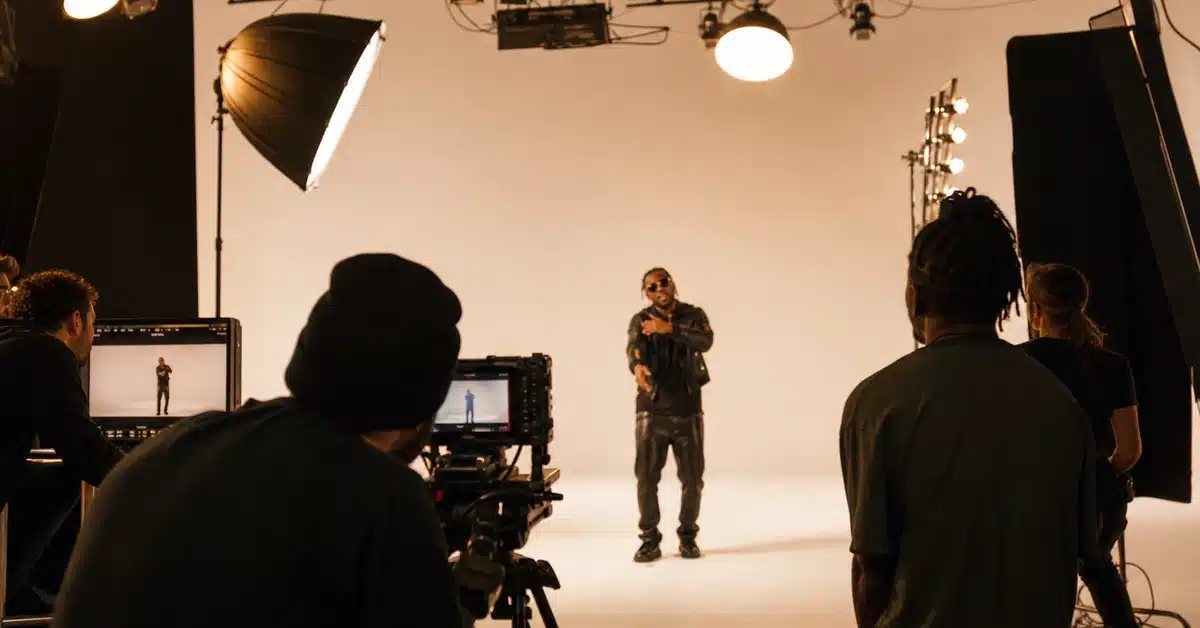
Music video production has changed faster than most artists realize. The 2025 Music Video Wrap Report analyzed 1,101 music videos released last year and found that 87% were performance videos — not the big-budget narrative epics people picture. That stat alone tells you something about where the industry is. The barriers to making a professional video have dropped, but the expectations for what a music video should accomplish have gone way up.
What hasn’t changed is this: a music video is still the single most powerful asset an artist can release alongside a track. Debut songs with a music video saw a 210% increase in streaming within seven days of release. Artists who skip video leave an enormous amount of discovery on the table. U.S. consumers spent an average of 1.8 hours daily watching music videos in 2023 — that audience is active and waiting.
The global music video production market hit $11.20 billion in 2024 and is projected to reach $20.39 billion by 2032. Record labels are now allocating 18–22% of their artist development budgets directly to video production — nearly double what they spent in 2019. The market is expanding, the tools are better, and the creative bar keeps rising. This guide walks through the entire process: what actually happens at each stage, which budget tier fits your project, why a professional studio changes the game, and where AI fits into the picture in 2026.
The Music Video Production Process — From Start to Finish
Most artists jump straight to the shoot. That’s the instinct — book a space, roll cameras, figure it out on the day. And it’s also the single most expensive mistake you can make.
Professional music video production runs through five distinct stages. Skip one and you pay for it later. Rushing pre-production means reshoots. A weak concept means an editor who can’t find a story to cut. No distribution plan means you release a video that nobody sees. The artists who get this right treat it like a system, not a one-off scramble.

Concept and Creative Direction in Music Video Production
This is where the video earns its existence. The concept answers one simple question: what makes someone who doesn’t know this song keep watching?
Too many artists default to “band playing in a warehouse.” That’s not a concept — it’s a fallback. A real concept takes a position on the song’s meaning, mood, or the artist’s identity. It might be literal (the story the lyrics tell), abstract (a visual metaphor), or performance-driven with a specific aesthetic. What separates good concepts from forgettable ones is specificity. One strong, specific visual idea is worth more than three vague ones stacked together.
During this phase, you’re also deciding format. Performance video? Narrative? Hybrid? The MVND report found that 90% of music video directors only directed one video in 2025 — meaning most artists work with a different director each time. If you’re self-directing, write your concept down as a treatment. Two pages maximum. Description of the visual world, the energy, the performance style, and a paragraph on why this concept fits this song specifically.
Pre-Production Planning
Pre-production typically runs two to four weeks. That sounds like a lot, and it is. But here’s the reality: the shoot itself is usually one or two days. Everything meaningful happens before you step on set.
Location scouting. Equipment list. Crew call. Shot list. Schedule. Wardrobe. Props. These things don’t resolve themselves — they get resolved during pre-production or they become problems during the shoot. A realistic timeline from commission to delivery is six to ten weeks, and pre-production is the biggest chunk of that window.
If you’re working with a director, this is when you align on the creative brief. If you’re self-directing, this is when you build your shot list and storyboard. Either way, the goal is the same: walk onto set with every shot planned and every person knowing what they’re responsible for.
Budget Tiers and What They Actually Get You
Budget is not the thing that separates good music videos from bad ones. Intention is. Clear concept, decent lighting, and competent editing will outperform expensive footage with no creative direction every single time. But knowing which tier you’re operating in matters — it shapes your crew size, your location options, and how many visual setups you can pull off in a single shoot day.
The Independent Artist Range
At the micro level, you’re working with a small crew — sometimes just yourself and a friend who knows their way around a camera. A minimal five-person crew starts at roughly $2,400 for a single shoot day. Camera packages rent for $500 to $5,000 per day depending on what you need. Editors bill $25 to $150 an hour, and a standard three-minute music video takes a minimum of two to three days of editing.
Most independent artists starting out should target the lower end of the production cost spectrum and prioritize lighting above everything else. A smartphone with a well-lit subject reads like a cinema camera. A high-end camera with bad lighting reads like a basement webcam. The best budget-friendly advice in the game: if you’re shooting with zero budget, shoot near a north- or south-facing window between three and five in the afternoon. Soft directional light. No harsh shadows. It works.
There’s also the 2x-speed lip-sync trick. Play the song at double speed while filming yourself performing, then slow the footage to 50% in the editor. Your lip movements snap perfectly to the original tempo, and the slowed motion gives the footage a dreamlike quality that costs exactly zero dollars.
Mid-Tier and Label Productions
Independent-tier productions step up the crew count and the number of visual setups. You’re working with a director of photography, dedicated lighting, maybe a stylist. Budgets in this range usually allocate 40–60% to the shoot day itself, 10–20% to pre-production, and 20–35% to post-production.
This tier is where studio spaces become the obvious choice. A realistic single-day studio music video production scope: two to three distinct visual configurations, four to six camera setups per configuration. That kind of variety is nearly impossible on location, where you’re limited to the light and architecture you find on arrival. Book a studio with a cyclorama wall and you control everything — the background, the light angle, the color temperature, the time of day.
At the higher tiers, you’re looking at label-backed productions with dedicated art departments, multiple shoot days, and professional post-production houses. Allocate roughly 20–30% of the total production budget to post-production at this level. The first ten seconds of your video are the most ruthlessly important — viewers decide whether to keep watching in those ten seconds, so the opening needs to be the best work in the entire cut.
Why a Professional Studio Makes the Difference
Location shoots have a ceiling. No matter how interesting the warehouse or the rooftop or the beach looks, you’re at the mercy of natural light, weather, noise, and whatever’s already in the frame. A studio flips that dynamic. You build the world instead of hoping you find it.

Control Over Your Environment
One of the most significant advantages of a studio over a location shoot is the ability to build a specific visual environment within the space. Clean walls, controlled lighting, and zero fixed interior elements mean your production can bring in whatever set pieces the concept demands. A cyclorama wall — a smooth, curved backdrop that eliminates corners and horizon lines — gives you an infinite background that reads as anything from stark white minimalism to saturated color washes depending on your lighting design.
At Lightz Out Studios in San Diego, the 1,800-square-foot production floor is built around this exact philosophy of music video production. Professional lighting rigs, multiple backdrop options, and a flexible open floor plan mean you walk in and start building your world. No compromises on angle because a window is in the wrong place. No waiting for clouds to clear. Every variable serves the creative, not the other way around.
Equipment Without the Rental Headaches
Renting gear from a third-party house adds cost, logistics, and risk. You’re coordinating pickup and drop-off windows. You’re signing liability waivers. You’re paying by the day for items that might sit idle during pre-light or setup. A studio that includes equipment with the booking removes that entire layer of friction.
A classic three-point lighting setup — key, fill, and back light — is the standard foundation for on-camera subjects. Tripods with pan-tilt heads are the most affordable and reliable form of camera stabilization. Cine lenses are designed specifically to meet the needs of filmmakers and videographers. These aren’t exotic tools. They’re fundamentals. Having them on-site and ready to go means your shoot day stays focused on performance and direction instead of logistics.
Pre-Production — The Phase That Decides Everything
If there’s one thread running through every article and interview about music video production, it’s this: pre-production is the phase that matters most. The modern workflow isn’t about renting a warehouse, hiring a 15-person crew, and hoping it all comes together in post. It’s about building a repeatable system that can handle performance videos, BTS content, vertical promos, and live-session content with a compact kit you can actually afford.
The Creative Brief and Treatment
Music video production starts with a creative brief — a one-page document that locks down the song’s tone, the artist’s visual identity, and the core concept in writing. It answers: who is the artist in this video? What are they doing? Why should anyone care? The treatment follows. It’s the expanded, visual pitch that describes the world of the video in enough detail that an artist, a label, or a producer can picture the final product.
Pay attention to a song’s tone, lyrics, and genre. Take note of the artist’s style, their background, and any personal causes they care about. That information shapes the treatment. A video that ignores who the artist actually is will feel hollow even if it’s technically flawless.
Shot Lists and Storyboards
A comprehensive shot list does two things: it identifies holes in your coverage before you’re standing on set, and it makes sure you’re better prepared when the shoot clock is ticking. Storyboards take that one step further — they sketch the frame for each setup so your DP, your lighting tech, and your production designer are all working from the same visual reference.
The shoot day moves fast. Decisions made on the fly are rarely the best ones. A locked shot list means you can improvise within a structure instead of inventing the structure while the clock runs. That’s the difference between a shoot that finishes early and one that runs into overtime.
AI and the New Music Video Workflow
73% of music videos in 2023 used AI-generated content such as text-to-video tools, visual effects, or AI-assisted editing. That number is almost certainly higher now. The AI conversation in music video production is loud, and a lot of it is noise. But some of it is genuinely useful — especially for independent artists who need to stretch creative output without stretching budget.
What AI Can Actually Do Right Now
AI-first hybrid productions now occupy their own budget tier, roughly $3,000 to $20,000 depending on scope. Generative tools handle background plates, texture generation, and some VFX passes that used to require dedicated artists. AI-assisted editing can rough-cut a performance video in hours instead of days.
The Berklee Emerging Artistic Technology Lab and Adobe surveyed 1,003 video creators, musicians, marketers, and music supervisors in 2026 and found that 32.7% have used AI-generated music as the final audio track in published content. 83.7% have chosen a trending sound before shaping their video content around it. 92.2% integrate their own original music into video projects. The takeaway isn’t that AI replaces creativity — it’s that creators are using AI as a tool inside a broader workflow, not as a replacement for it.
Where Human Direction Still Wins
AI can’t direct a performance. It can’t read the energy on set and decide the third take was the one. It can’t build trust with an artist who’s nervous about being on camera. These are human skills and they always will be. The artists getting the best results right now are the ones who treat AI as a production tool — like a new lens or a faster editing rig — rather than a substitute for creative vision.
The 6.7 million videos posted across 11 million artist channels in 2024 make one thing obvious: volume is not the differentiator. Vision is. U.S. consumers spent an average of 1.8 hours daily watching music videos in 2023. If your video doesn’t grab someone in the first ten seconds, they scroll past it and into an infinite feed of alternate options. AI can help you move faster. It cannot give you something worth watching.
Frequently Asked Questions About Music Video Production
How long does music video production take from start to finish?
Plan for six to ten weeks from commission to delivery. Pre-production runs two to four weeks — this is concept development, location or studio booking, crew assembly, and shot list building. The shoot itself is typically one to two days. Post-production adds another two to six weeks depending on the complexity of the edit, color grade, and any VFX work. Rushing pre-production is the single most common cause of reshoots and budget overruns.
What equipment do I actually need to shoot a music video?
You need a camera that shoots clean video in controlled light, a tripod with a pan-tilt head for stable shots, and a basic lighting kit. A classic three-point setup — key light, fill light, and back light — is the standard for on-camera subjects. Cine lenses improve image quality noticeably over standard photo lenses. Beyond that, every piece of gear should serve a specific creative choice. More equipment does not equal a better video; intentional equipment does.
Should I shoot on location or in a studio?
Studios win on control. You decide the lighting, the backdrop, and the schedule — no weather delays, no noise interruptions, no compromises on angle. A cyclorama wall gives you an infinite smooth background that a location simply cannot replicate. Location shoots work when the setting itself tells part of the story — a specific neighborhood, a recognizable landmark, a natural landscape. For performance-driven music videos, a professional studio environment is almost always the stronger choice.
Can I make a good music video without a big crew?
Yes. A clear concept, good lighting, and competent editing matter more than crew size. The 2x-speed lip-sync trick — filming yourself singing at double speed, then slowing the footage 50% in the editor — costs nothing and produces a polished result. A smartphone with a well-lit subject reads like professional gear. What you cannot fake is creative direction. If the concept is weak, no amount of crew will save it. If the concept is strong, a small crew can execute it beautifully.
How much should I budget for post-production?
Allocate 20–30% of your total production budget to post-production. This covers editing, color grading, sound sync, and any VFX or motion graphics. A standard three-minute music video takes a minimum of two to three days of dedicated editing. Professional editors bill $25 to $150 per hour depending on experience level and project complexity. Color grading is a separate pass and should never be skipped — it’s what makes good footage look cinematic.
Is AI worth using for music video production?
For specific tasks — yes. AI tools handle background plate generation, rough-cut editing, and certain VFX passes faster and cheaper than manual methods. 73% of music videos released in 2023 incorporated some form of AI-generated content. But AI cannot direct a performance, read the energy on set, or make creative decisions. The best approach treats AI as a production tool inside a human-led creative workflow. Use it to move faster, not to replace the vision.
Music video production in 2026 is more accessible than ever — and more competitive. The tools have leveled the playing field, but the fundamentals haven’t budged. A strong concept beats an expensive camera. A planned pre-production beats a rushed shoot day. And a professional studio space — with controlled lighting, cyclorama walls, and gear included — gives you a creative advantage that no location can match.
If you’re an artist, a director, or a producer planning your next music video production, Lightz Out Studios in San Diego offers an 1,800-square-foot production floor with professional lighting rigs, a cyclorama wall, and a full suite of on-site equipment. Book by the hour or the full day. Bring your vision — we handle the rest. If you’re also thinking about your artist brand presence, check out our professional headshots page. For integrated creative campaigns that connect your music video to a larger marketing strategy, our parent company InnoVision Marketing Group handles everything from brand strategy to full-scale campaign production — all from the same San Diego campus.

