
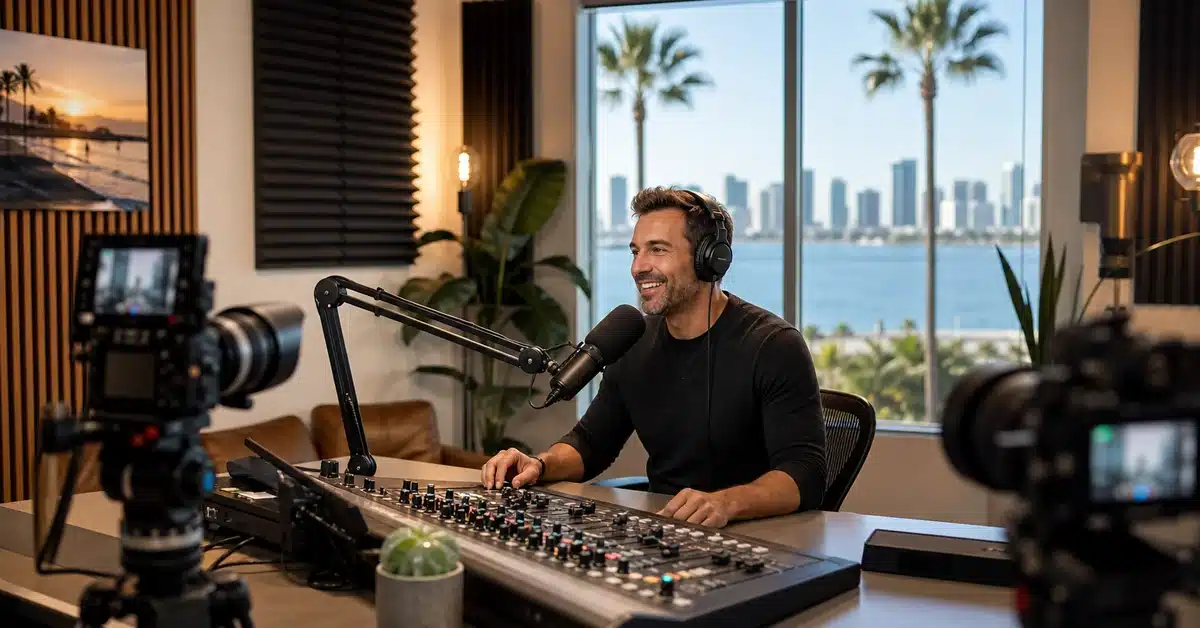
Renting a podcast studio is the fastest way to get professional audio and video without dropping five figures on gear you’d use twice a month. The math isn’t complicated — across 211 US studios that publish their rates, the average podcast studio rental runs $104 an hour, with most landing between $50 and $125 depending on your city and what’s included. That $104 buys you soundproofed walls, calibrated mics, and a space where you walk in, hit record, and sound better than 90% of the bedroom podcasts out there, according to PodcastStudio’s 2026 directory of 211 studios nationwide.
The catch? Not every studio gives you the same value for that hourly rate. Some hand you a key and a basic interface. Others put an audio engineer, three cameras, and a full lighting rig at your disposal. Knowing the difference is what separates a podcast that sounds radio-ready from one that sounds like a Zoom call.

How Much Does It Cost to Rent a Podcast Studio in 2026?
Studio rental pricing splits into three clear tiers, and what you pay mostly depends on whether you’re running the board yourself or letting a professional handle it.
Audio-Only (DIY): $35 to $75 per hour. This is the self-serve tier. The studio provides the room, microphones, an interface, and basic acoustic treatment. You bring a laptop, plug in, and run your own recording session. No engineer, no video, no hand-holding. It’s the most affordable way to get a professional podcast studio rental if you’re comfortable with basic audio gear.
Audio + Video (Self-Operated): $75 to $150 per hour. You get broadcast-quality mics, an audio interface, and one to three cameras — but you still operate everything yourself or with a co-host. Studios in this tier typically pre-set the lighting and camera angles so you can walk in and start recording within minutes. For creators who want video podcasting capabilities without hiring a crew, this is the sweet spot, according to Brand Viva Media’s 2026 pricing guide.
Full-Service (Engineer, Editor, Multi-Cam): $200 to $500 per hour. This tier includes a dedicated audio engineer who levels your tracks, monitors the session, and often handles post-production editing. Studios at this level run multi-camera setups with live switching, green screens, teleprompters, and broadcast-ready everything. It’s the choice for branded podcasts, agency productions, and anyone who wants to show up, talk, and leave with a finished episode.
City matters even more than the tier. Los Angeles averages $126 an hour for a podcast studio rental, with rates spanning $50 to $290 depending on the neighborhood and feature set. New York sits at $118 (range: $80–$250), while Atlanta lands around $100 (range: $75–$350). Smaller markets like San Bernardino drop to $55 an hour for a basic setup, per PodcastStudio’s city-by-city breakdown. The gap between the cheapest and most expensive studio in any given city usually comes down to three things: square footage, engineer inclusion, and camera count.
What’s Included in a Professional Podcast Studio Rental?
Walking into a studio and finding out what you actually get for your money can make or break your session. Here’s what separates a real production space from a room with a mic in it.
Acoustic Treatment and Soundproofing
The single biggest reason to rent instead of recording at home. Professional acoustic panels, bass traps, and sound-dampening materials kill room echo, outside noise, and that hollow “closet sound” that plagues DIY recordings. Studios like ECG Productions in Atlanta advertise soundproof booths with four broadcast mics, headphones, and a full mixing board — and the difference is audible within the first three seconds of playback.
Broadcast-Grade Microphones and Interfaces
Most studios stock Shure SM7Bs, Electro-Voice RE20s, or Rode Procaster mics — the same models you see on every professional podcast set. These aren’t the $60 USB mics gathering dust on your desk. Paired with a multi-channel audio interface and individual headphone mixes, each guest gets a clean, isolated track that makes post-production dramatically easier.
Multi-Camera Video Setup
Video podcasting is no longer optional. The Podcast Landscape 2025 report from Sounds Profitable found that 55% of Americans 18 and older now consume podcasts monthly, and video-capable podcast consumption grew 5% year-over-year while audio-only expectations shrank by the same margin. Studios have responded — most professional podcast studio rental spaces now include at least two cameras, and top-tier rooms like LA Castle Studios in Burbank run multi-camera Unreal Engine stages with over 200 swappable virtual sets.
Live Switching, Lighting, and Monitoring
Full-service studios include a video switcher for cutting between cameras in real time, professional LED lighting panels with diffusion, and studio monitors so you can hear exactly what your audience will hear. LA Podcast Studio, a 4,500-square-foot warehouse in Echo Park, includes all of this in their $165-per-hour audio-plus-video package — and the result is a finished product that needs minimal editing.
Engineer and Post-Production
Having an engineer in the room is the single biggest quality multiplier for any podcast studio rental. They set levels, watch for clipping, mute coughs in real time, and handle the technical stack so hosts can focus entirely on the conversation. Post-production editing typically adds $50 to $150 per hour at 2–4 hours per finished episode, per Brand Viva Media’s analysis — a cost worth budgeting for if you want polished, release-ready audio.
Renting vs. Building Your Own Podcast Studio: A Complete Cost Comparison
The “should I just build my own?” question comes up constantly, and the numbers make the answer surprisingly clear for most creators.
Building a basic in-house studio — four acoustic panels, two mid-range dynamic mics, a two-channel interface, headphones, mic stands, cables, and basic lighting — runs $4,500 to $9,000. A professional build with a dedicated room, full acoustic treatment, four broadcast mics, a multi-channel mixer, three cameras, a video switcher, and proper studio lighting costs $20,000 to $45,000 or more. That’s before you factor in the ongoing cost of a producer or audio engineer, which runs $3,000 to $6,000 per month.
Now compare that to renting. At the national average of $104 per hour for a podcast studio rental, a weekly one-hour show costs about $416 per month — or roughly $5,000 per year. Two hours per week doubles that to $10,000. You would need to record consistently for four to nine years at the two-hour weekly rate before your rental costs exceeded the upfront build cost of a professional studio. And that build cost doesn’t include rent on the additional square footage, utilities, equipment maintenance, software subscriptions, or the time you spend troubleshooting a buzz in channel three instead of preparing for your guest.
There’s a third option that splits the difference: day rates. Most studios offer full-day blocks at 20–30% less per hour than their hourly rate, according to Podyx’s 2026 studio pricing guide. At $800 for a 10-hour day (Lightz Out Studios’ full-day rate, for example), you’re paying $80 an hour — well below the national average. Batch-recording four episodes in one day costs $800. Month to month, that’s harder to beat with a build-out.
Lyvi’s analysis of the UK podcast studio market found that 80% of creators are better off renting than building. The math is straightforward: unless you’re publishing multiple episodes per week with an in-house team, the studio rental always wins.
Why Video Podcasting Is Changing Studio Rental Requirements
Five years ago, renting a podcast studio meant finding a quiet room with good mics. Today, it means finding a space that can put you on YouTube, Spotify Video, and every social clip channel in between — and that shift has fundamentally changed what studios need to offer.
The data backs this up. Video podcast consumption is growing while audio-only expectations shrink, and platforms are rewarding the shift. YouTube is now the most-used platform for podcast listening in the US. Spotify has invested heavily in video podcast discovery. TikTok, Instagram Reels, and YouTube Shorts all pull from long-form video podcast content — and a podcast without a video component is leaving distribution on the table.
For anyone searching for a podcast studio rental in 2026, the checklist now includes: multiple camera angles, 4K recording capability, real-time switching between cameras, and lighting that makes hosts look professional on screen — not just sound professional on mic. Studios that invested early in video infrastructure, like The Studio Venue in Burbank ($150/hour with engineer and multi-cam included), are seeing demand outpace audio-only rooms.
This also means the cost conversation has shifted. A $75-per-hour audio-only studio still has a place for interview podcasts where the audio quality carries the show. But for any podcast with ambitions beyond the RSS feed — brand partnerships, YouTube monetization, social growth — the video-capable tier at $100–$165 per hour is the new baseline. The additional $25–$50 per hour buys you into every platform your audience actually uses.
How to Choose the Right Podcast Studio for Your Show Format and Budget
The right studio depends less on the price tag and more on what kind of show you’re making. A solo narrator reading scripts has fundamentally different needs than a four-person roundtable with remote guests.
Solo Shows and Interview Podcasts (1–2 People)
A compact, well-treated room with two mics and a single camera covers most needs here. Studios in the $50–$100 per hour range are perfectly adequate. Look for clean acoustics, comfortable seating, and a straightforward interface — you don’t need a 20-foot cyc wall for a one-on-one conversation. The Pod San Antonio runs four premium studios from $85 to $165 per hour, with a 50% monthly membership discount for regulars — exactly the kind of option that makes sense for weekly interview shows.
Panel Shows and Roundtables (3–4+ People)
Multiple guests mean multiple mics, individual headphone mixes, and enough camera angles to cover everyone at the table. This is where square footage starts to matter — a 10×10 room with four people feels cramped on camera. Studios advertising 400+ square feet with multi-cam setups are what you’re looking for. Budget $125–$200 per hour. Twin Cities Podcast Studio and The Pod San Antonio both cater well to this format with purpose-built spaces.
Video-First and Branded Podcasts
If the visual component is as important as the audio — branded backdrops, dynamic lighting, B-roll inserts — you need a studio built for production, not just recording. Look for spaces with cyclorama walls, customizable lighting grids, and in-house production support. LA Podcast Studio’s Echo Park warehouse ($165/hour with audio) and The Studio Venue ($150/hour with engineer and multi-cam) represent the high end of what a podcast studio rental can deliver. These spaces are set up for brand shoots that happen to be podcasts, not the other way around.
Remote Guest Setups
If half your guests dial in, find a studio that supports remote recording natively — dedicated mix-minus feeds, platforms like Riverside or SquadCast integrated into the workflow, and a monitor for seeing remote guests on screen. The Studio Venue specifically advertises remote guest recording as part of their package, and it’s a detail worth confirming before booking.
Three Questions to Ask Before Booking Any Podcast Studio Rental
1. Is an engineer included, and what exactly do they handle? Some studios include an engineer who only sets levels and hits record. Others provide a producer who actively monitors the mix, cues guests, and flags issues in real time. The difference is the difference between catching a mic pop during recording or discovering it in post.
2. What’s the camera and lighting situation? “Multi-cam” can mean two Logitech webcams or three Sony FX3 cinema cameras. Ask for specifics — camera models, resolution, and whether live switching between angles is included. If the studio can’t tell you what cameras they’re running, assume they’re running consumer-grade gear.
3. Can I see the raw files before I leave? The smartest thing you can do at the end of any session is listen to 30 seconds of raw audio through good headphones. Hum, buzz, room tone — these are easy to miss during recording and a nightmare to fix in post. Any professional podcast studio rental should let you check the files before you walk out the door.
Frequently Asked Questions About Podcast Studio Rentals
How much does a podcast studio rental cost per hour?
Most US podcast studios charge between $50 and $150 per hour, with the national average at $104 per hour. Audio-only DIY rooms start around $35–$75 per hour, while full-service studios with an engineer and multi-camera video run $200–$500 per hour. Day rates typically offer 20–30% savings over the hourly equivalent.
What equipment is typically included in a podcast studio rental?
A professional podcast studio rental includes broadcast-grade dynamic microphones (typically Shure SM7B or Electro-Voice RE20), a multi-channel audio interface, individual headphones for each guest, acoustic treatment and soundproofing, studio monitors, mic stands, and cabling. Video-capable studios add 2–3 cameras, professional LED lighting, and a video switcher for multi-angle recording.
Is it better to rent a podcast studio or build my own?
For most podcasters, renting wins on cost for years. A professional in-house build runs $20,000–$45,000 upfront plus $3,000–$6,000 monthly for a producer. At the national average rental rate of $104 per hour, a weekly one-hour show costs about $5,000 per year — meaning you’d need 4–9 years of consistent recording before building breaks even. For creators publishing biweekly or weekly, renting is almost always the smarter financial move.
Do podcast studios offer day rates or packages?
Most professional studios offer day rates at 20–30% less per hour than their standard hourly rate. Podyx’s studio pricing data shows that pre-paid session packages lock in discounted rates and build recurring client relationships over 3–5 month periods — a model that benefits both the studio and regular hosts.
What should I look for in a video podcast studio?
Look for at least two professional cameras (not webcams), dedicated video lighting with diffusion, live switching between camera angles, a monitor for seeing yourself and remote guests, and 4K recording capability. Confirm whether an engineer runs the video switching or if you’re expected to manage it yourself. A studio that can show you sample video footage from a recent session is worth more than any spec sheet.
Can I record with remote guests at a podcast studio?
Yes, most professional podcast studios support remote guest recording. Look for studios that offer dedicated mix-minus feeds (so remote guests don’t hear their own audio echoed back), integration with platforms like Riverside or SquadCast, and a monitor or screen for seeing remote participants during the session. Ask whether the studio records remote audio locally or relies on the internet connection quality — local recording always sounds better.

Book Your Next Podcast Studio Rental in San Diego
You don’t need a $20,000 build-out to sound like a professional podcast. A great podcast studio rental gives you the room, the gear, and the acoustics — and lets you focus on the part that actually matters: the conversation.
Lightz Out Studios in San Diego offers a 1,800-square-foot professional production space at $125 per hour with a 4-hour minimum, or $800 for a full 10-hour day. The studio comes fully equipped for both audio and video podcast production — professional lighting, multiple backdrop options, and a flexible open floor plan that accommodates solo hosts and full panel shows alike.
Located at 5797 Chesapeake Court in San Diego, the studio is part of the same creative campus as InnoVision Marketing Group and Pretzel Logic Productions — giving you access to post-production, creative strategy, and full campaign support if your podcast grows beyond a weekly recording session.
See the space. Hear the difference. Book your podcast studio rental at Lightz Out Studios and make your next episode the one that doesn’t sound like it was recorded in a closet.

